
 Français
 English
 Deutsch
Once the seed is sown, you have to select your rootstocks.
Why select at all?
With uncertified seed especially, the flowers may have been pollinated by any citrus pollen in the neighbourhood.
A ruthless selection is therefore advisable, to secure the characteristics you are after — hardiness, suitability to the soil, fruit quality, yield, early cropping. Otherwise it is a lottery, and the amateur rarely has the time or the space to play :)
Polyembryony, nucellar, zygotic?
Polyembryony simply means that one seed can contain several embryos. By sectioning the ovary, researchers observed that some embryos arise from the fusion of a male and a female gamete, while others bud from the nucellus — maternal tissue.
The first come from sexual reproduction and are called zygotic; the seedlings may therefore be hybrids if the gametes were genetically different.
The second do not result from fertilisation, so they are genetically identical to the mother plant and are called nucellar. In theory they match the parent, yet new varieties have been created by grafting a bud of nucellar origin onto a rootstock and comparing it with the mother plant — the Silverhill satsuma, for instance, which came from a nucellar seedling of Owari.
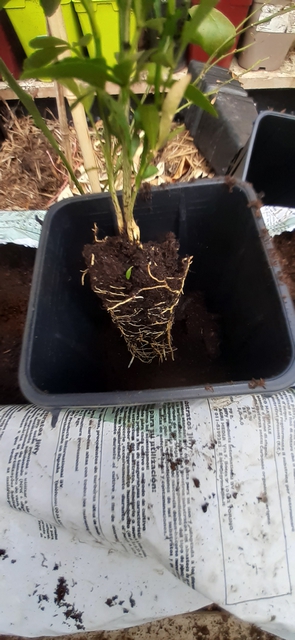
A single pip may hold 10 embryos, more in some varieties. Only those above 5 mm will germinate and have the reserves to get past the stage of a tiny root. Here is an example of polyembryony in one-year-old plants, where three seedlings remain:
The largest embryo is often of nucellar origin (H. J. Webber), but not always. Without going into detail, gamospermic polyembryony produces two identical, vigorous zygotic embryos — although that happens in under 1 % of cases, and the amateur has no way of telling.
As noted above, only embryos over 5 mm produce a seedling, so a single seedling emerging does not mean it is zygotic. Equally, when two seedlings appear, the larger may be the zygotic one if it germinated first — but statistically that is not the usual case.
In short: use certified seed where you can, and keep the best-developed plants as rootstocks. Statistically they stand a good chance of matching the parent.
Which plants to discard
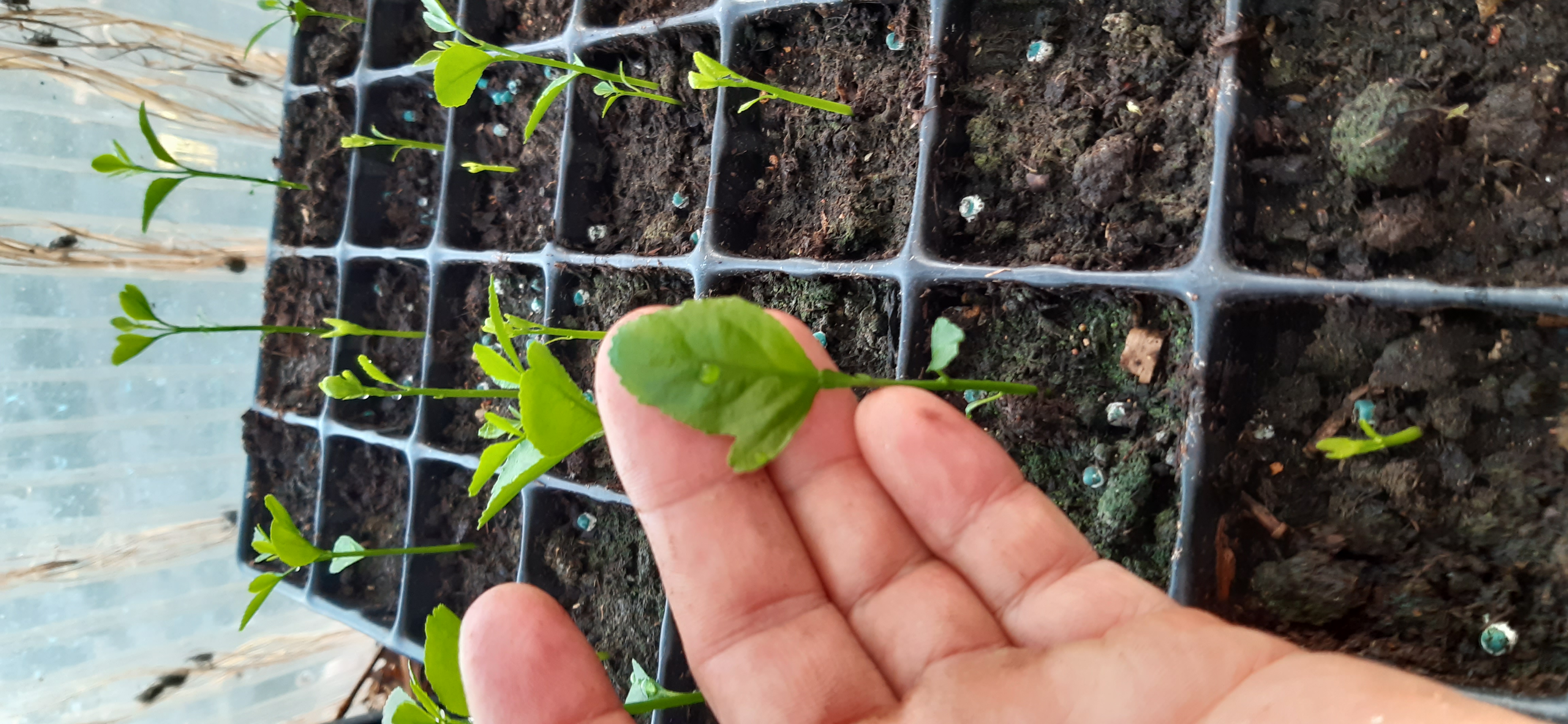
After 6 months you can start sorting out those that differ phenotypically — bifoliate leaves on a trifoliate parent, for example, which happens often with C35:
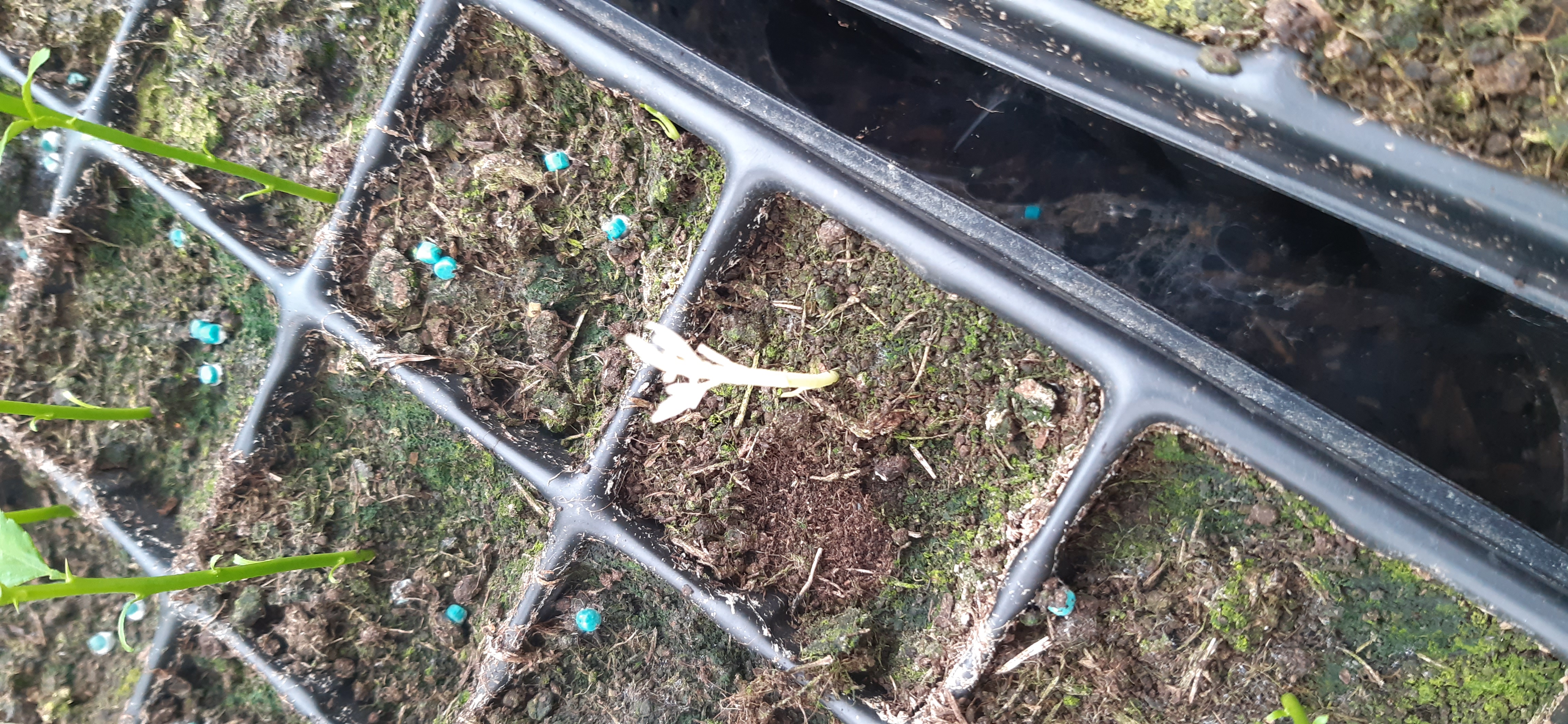
As they come through you will see a few albino plants, which die of their own accord for want of photosynthesis:
After a year in cultivation, at potting on, discard every plant with a root defect. In the photographs below I removed the medium so that it shows clearly, but I avoid bare-rooting plants because they take longer to re-establish.
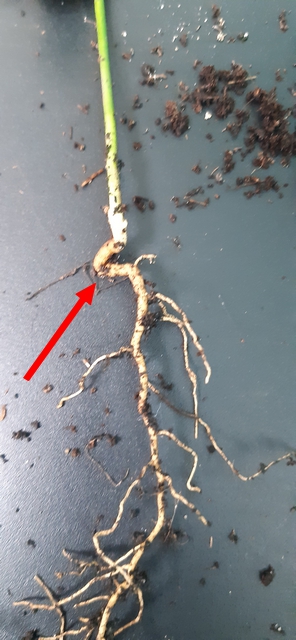
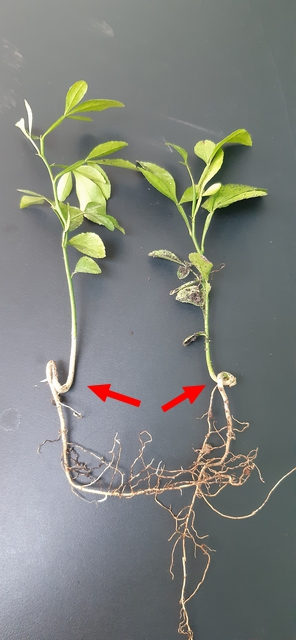
Keep only the finest plants, those with a good straight root:
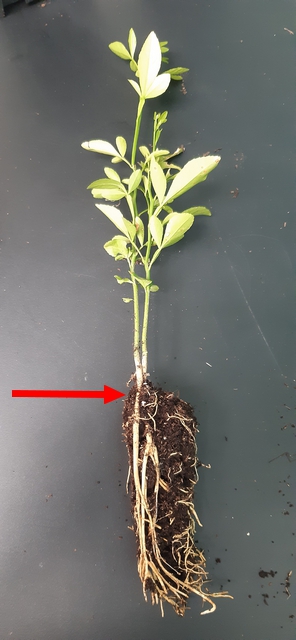
A fine-grade professional medium prevents the J-rooting shown here:
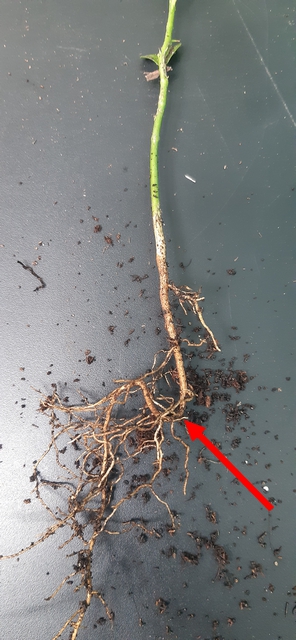
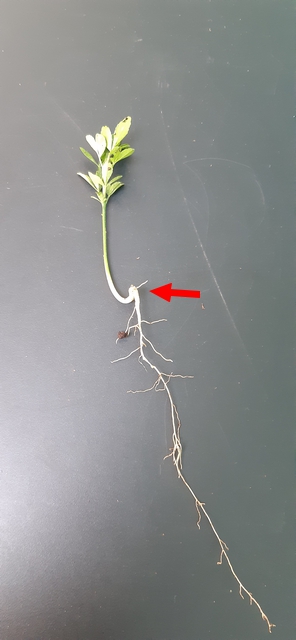
To inspect a plant without bare-rooting it, simply scrape away the top 2 centimetres of medium — easy with a professional grade. Root defects are usually located there, and stem from a problem at germination:
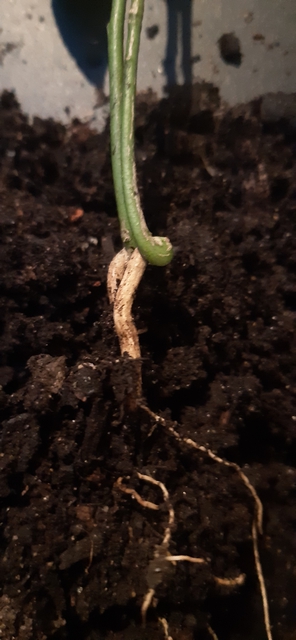
How to select
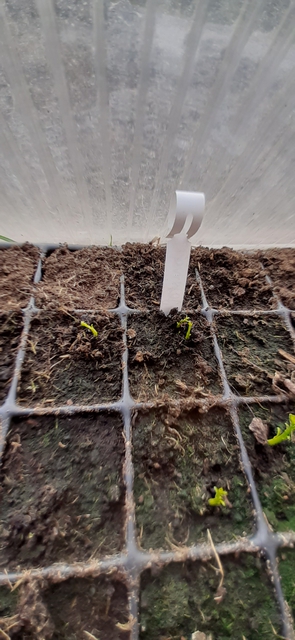
Where there is polyembryony, mark every multiple seedling with a cocktail stick or a label:
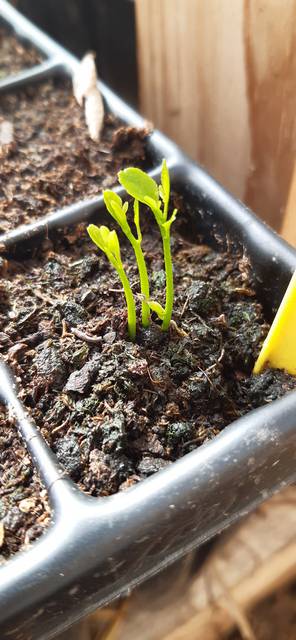
Cut out the weaker one after a year, at potting on, if it has not already died:
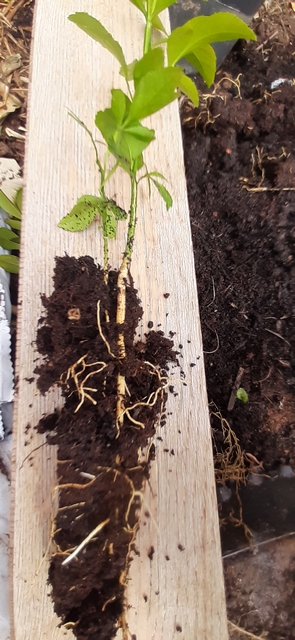
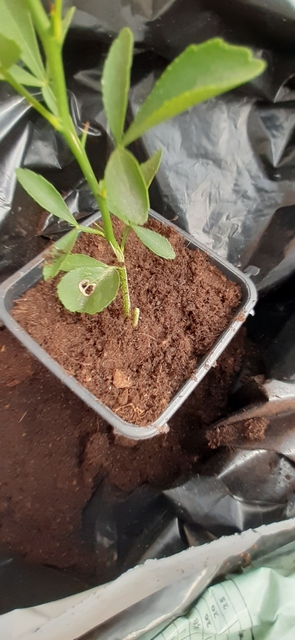
After a year I keep the finest plants; they should measure at least 15 centimetres, otherwise conditions were not right — temperature, container depth, medium, feed and so on:
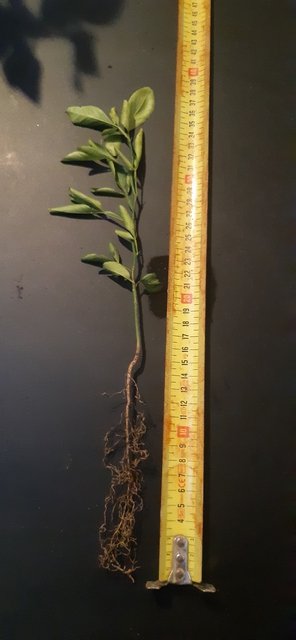
Here, with my methods, the best 10 % reach about 50 cm including the root after one year, and the citrumelos are 4 to 5 mm in diameter:
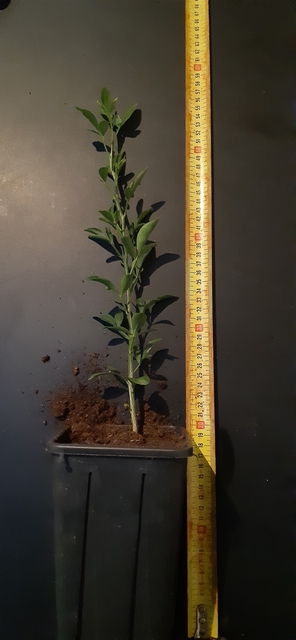
After one growing season I keep only the finest plants in spring — 20 % of the sowing — and pot them on into 11×11×20 pots:
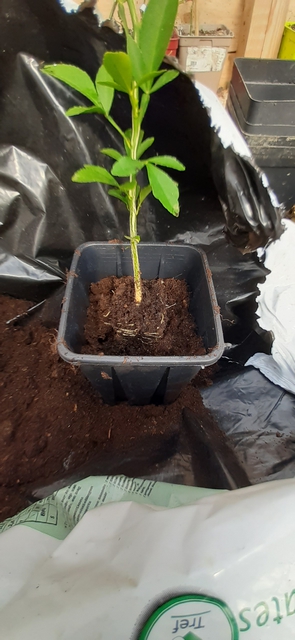
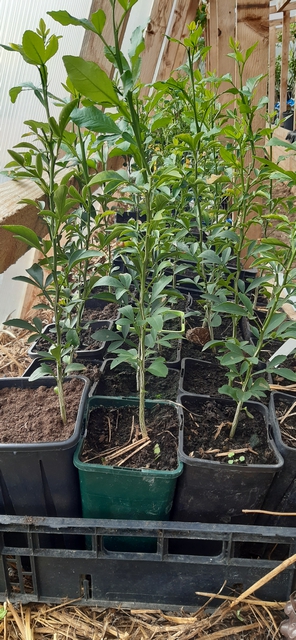
As growth resumes I remove every shoot except the top 3, to build a new leader:
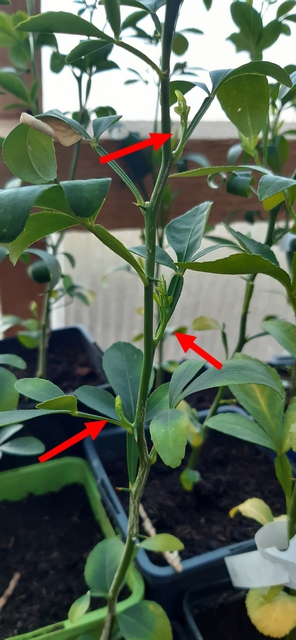
A week or two later I keep only the most vigorous shoot, the one best aligned with the stem:
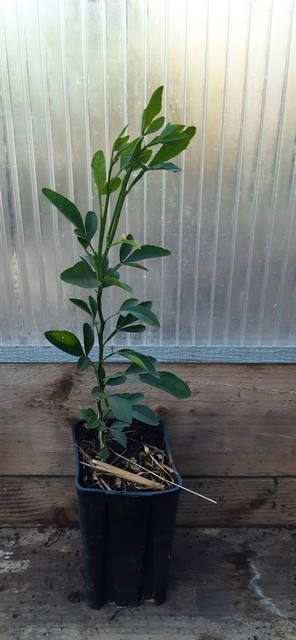
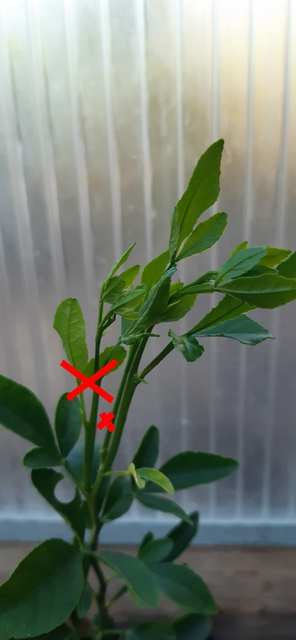
And there is the plant, ready to grow:
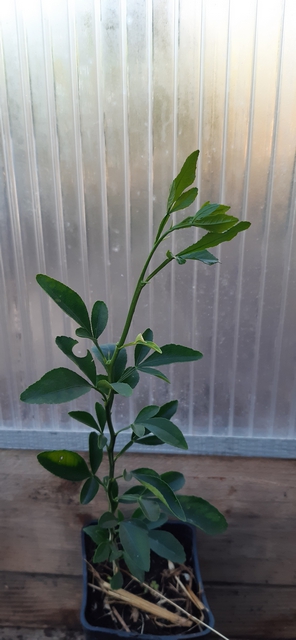
Through the year, keep the plant growing straight and rub out side shoots so that you end up with a single, straight stem.
By the second spring the plant is ready to graft. You can wait another year for slower varieties such as poncirus, for thicker rootstocks, or simply if you have no scion wood.