
 Français
 English
 Deutsch
Choosing the right rootstock largely decides whether a citrus tree will establish in open ground. It depends on three things:
- your climate
- your soil
- the type you intend to graft (orange, mandarin, grapefruit, lemon and so on)
Climate
For climate, work out which hardiness zone you are in, using a USDA map for example. Be careful — many of them are decidedly optimistic, because they are based on averages rather than extremes. The map below is closer to reality:
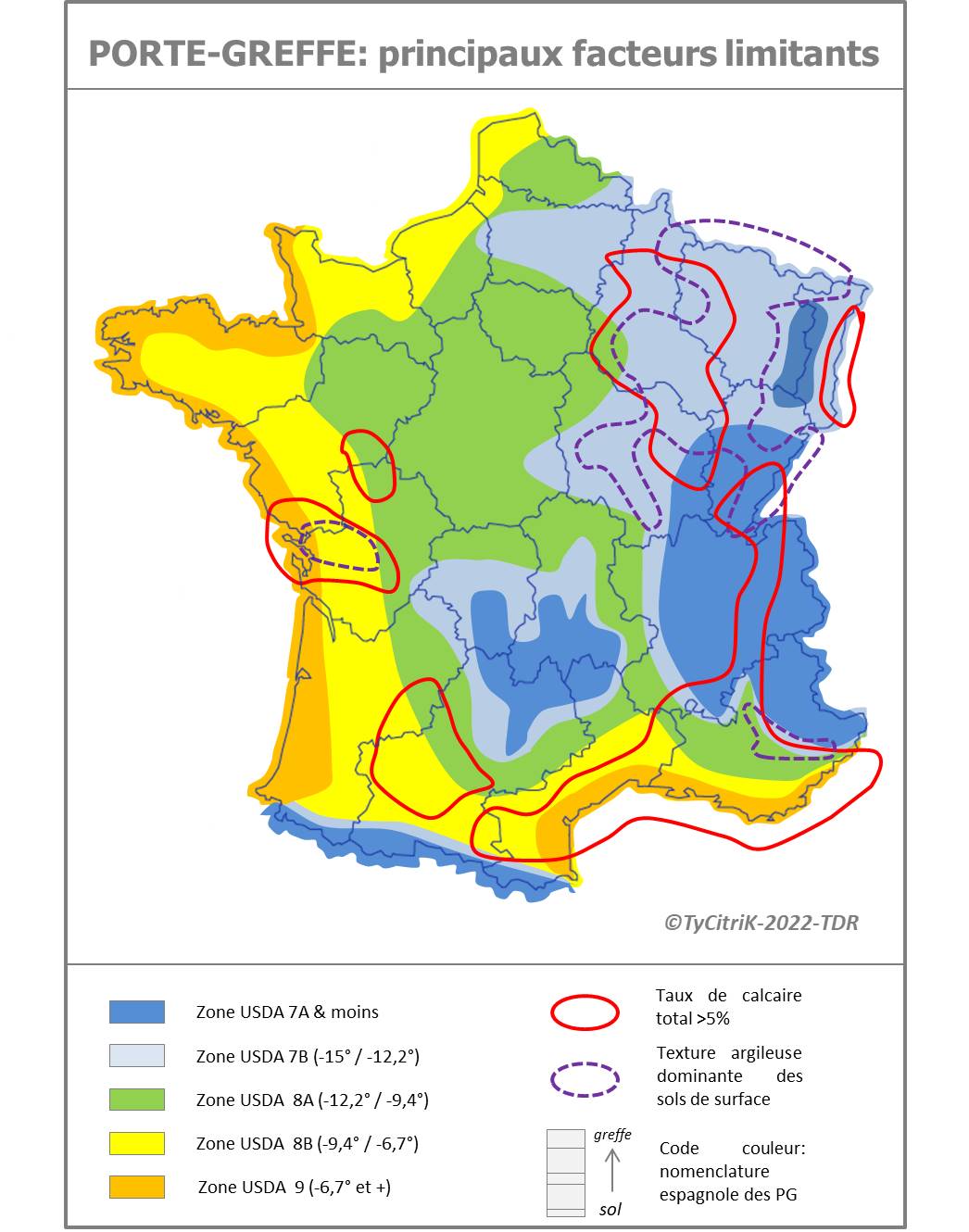
In my case, south of Toulouse, I am in zone 8b.
You can then cross-check those figures against the records of the nearest weather station (Infoclimat).
If the station you pick has no history over the last 20 years, choose one slightly further away.
Start with the chart of minimum temperatures:
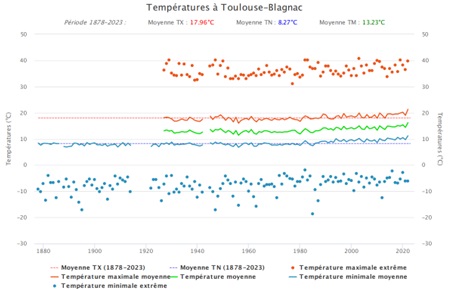
In our case, over 20 years, there were two cold spikes: -10 °C in 2001 and -12 °C in 2012. Apart from those two, the lowest temperatures are -7 to -8 °C, which fits zone 8b well.
Next, look at the frequency-of-cold chart:
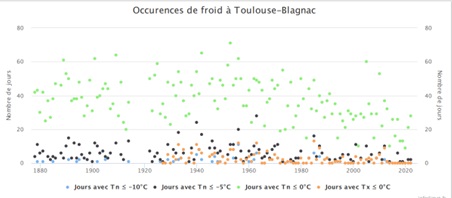
Counting the days when the temperature dropped below -10 °C, it only happened in 2012, on 2 days.
The number of days below -5 °C can reach 10 a year in our case.
The last useful chart is the number of ice days — days when it never thaws:
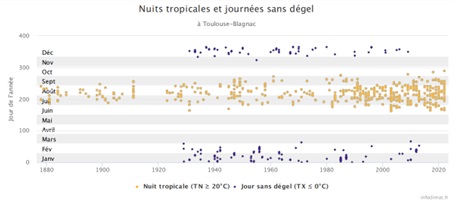
So for my zone I settle on: extremes down to -12 °C, minima usually around -8 °C, and few ice days.
All of this lets you judge the risk of planting something insufficiently hardy. I have set my own open-ground limit at -7 to -8 °C, and I accept that I will occasionally have to protect the most tender ones and, at worst, lose them.
Plants at that level of hardiness go into strategic spots — south-east facing slopes, shelter belts, against walls. To find them, watch where the ground thaws first in winter and take comparative temperature readings.
Once the position is settled and the minima known, you can choose the rootstocks that suit — here, above -10 °C / -12 °C:

One more thing to bear in mind: cold is far more damaging to a rootstock that is in active growth. Reports on C35 and Carrizo show that at temperatures above their nominal hardiness — around -5 °C, say — the bark can split with frost. So be cautious with rootstocks that are not deciduous. That said, seed-raised C35 throws up a lot of off-type plants, and poor selection may well be the real cause.
Once the rootstock is chosen for hardiness, check that it suits your soil type.
Soil
The second factor in choosing a rootstock is your soil. The rootstock is nothing other than the root system of the tree you are planting, so it had better suit the ground it will live in.
In France, a first indication of soil type can be found on the Géoportail mapping service:
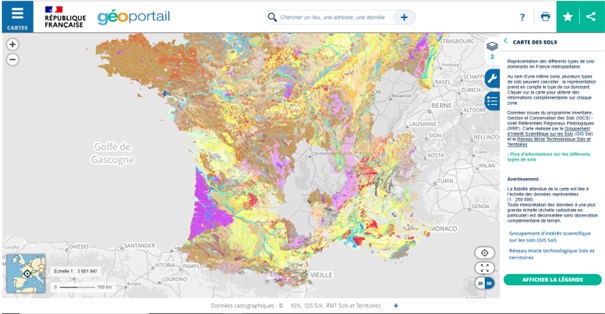
Clicking on your own area:
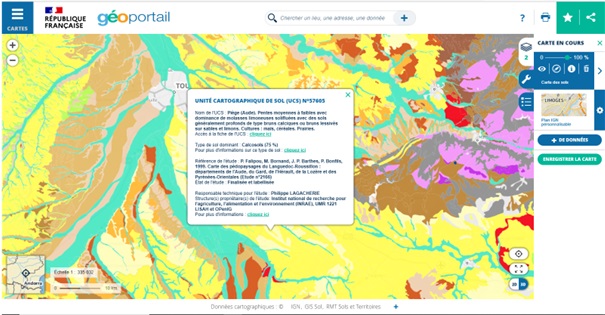
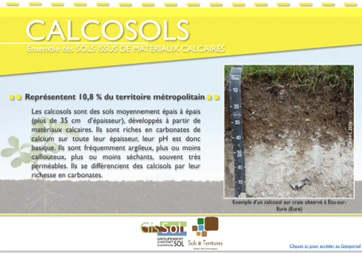
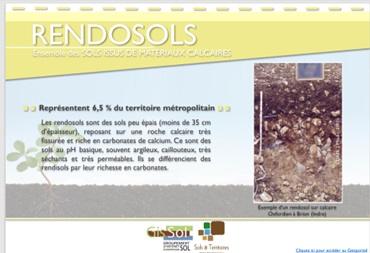
The links give details of the soils nearby — in my case calcosols and rendosols, both calcareous:
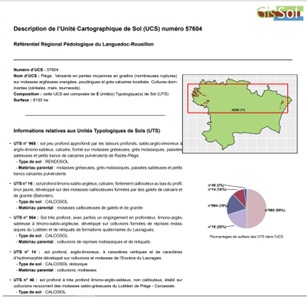
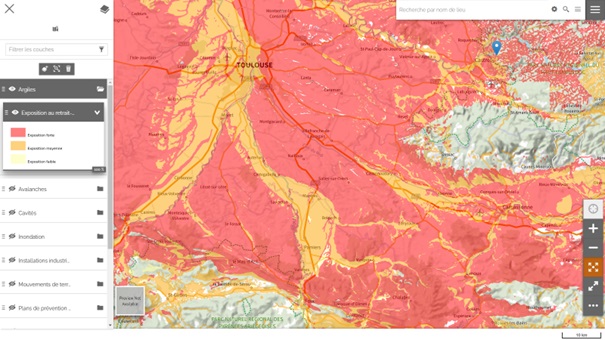
For clay soils, this site is worth consulting:
You can also look at soil surveys carried out for drainage systems or for the foundations of recent houses — ask the neighbours — or, as in my case, surveys following clay shrink-swell damage recognised as a natural disaster:
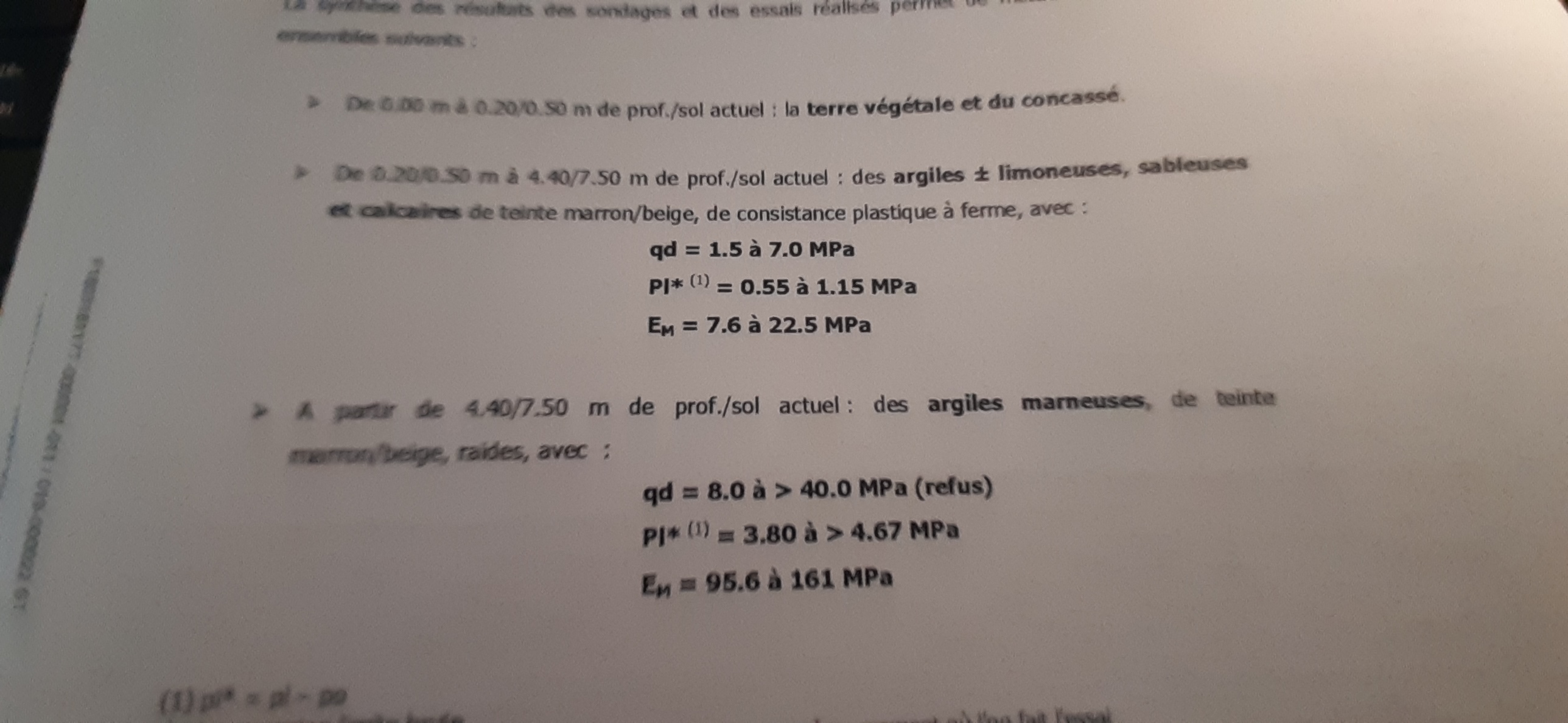
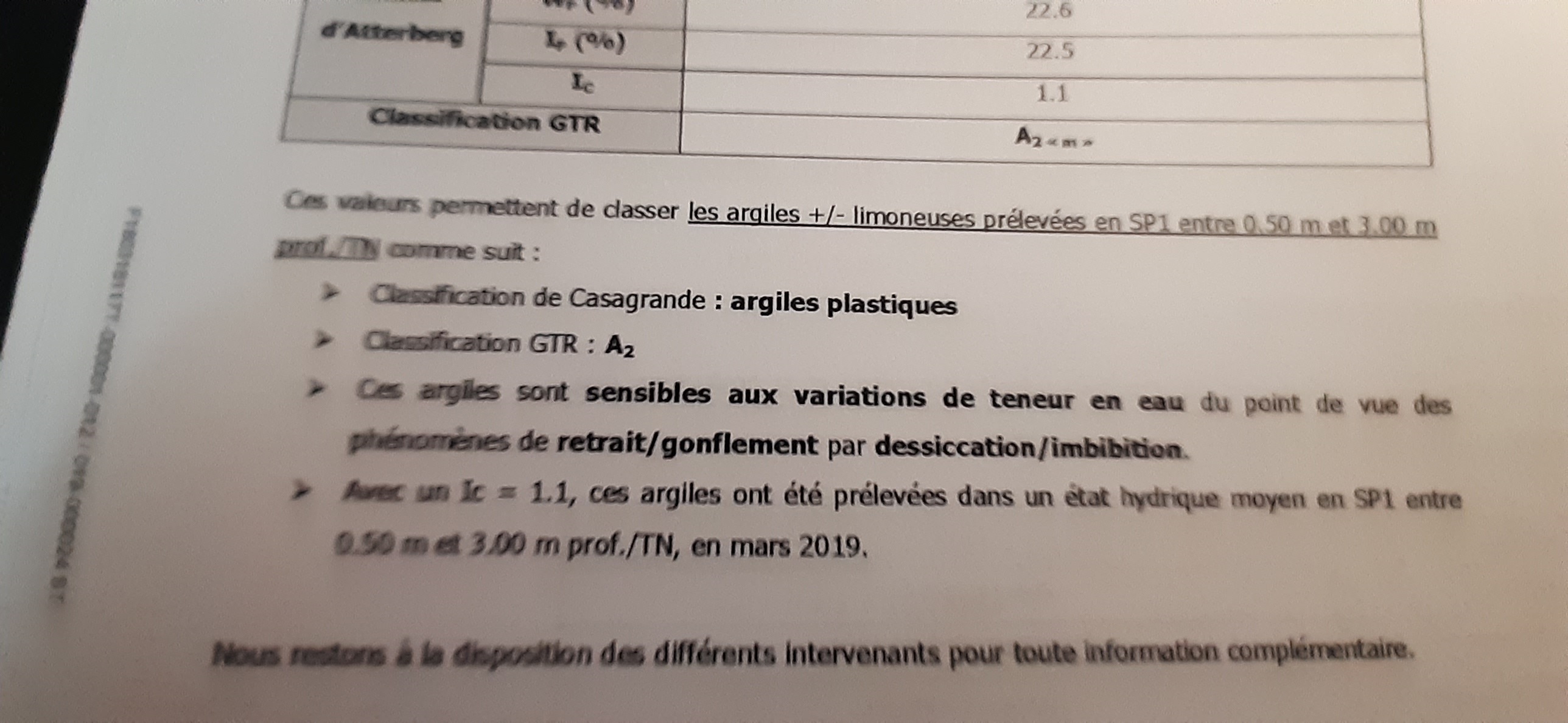
The GTR classification under standard NF P11-300 tells us here that we have fine clayey sand, silt, low-plasticity clay and marl, and grus.
All of this can be confirmed by a laboratory soil analysis or, failing that, by a series of simple tests that give useful pointers:
- Hand texture test
- Jar sedimentation test
- Ribbon or roll test
- pH test, with a garden-centre kit or pool test strips
- Vinegar test for lime
You will find all the necessary detail and videos online.
Finally, the plants growing there of their own accord are valuable indicators:
INDICATOR PLANTS: reading a soil from its vegetation… (chapelle-berard.com)
In my case I find dock, plantain, couch grass, thistle and bindweed — pointing to compacted, calcareous soils that tend to waterlog in winter and dry out in summer.
With all that you have a much clearer picture of your soil, and you can choose your rootstock:
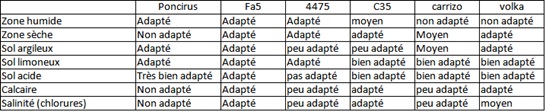
For my calcareous clay soil, waterlogged in winter and parched in summer:
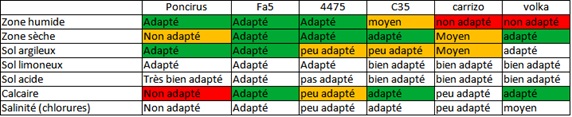
FA5 looks like the ideal candidate — but beware: most of the studies were carried out in Spain, not in France. We still have little hindsight on this rootstock and how it really behaves in damp cold.
Here, mine have come through 3 winters without trouble (-6.8 °C at the coldest) but have barely grown. In pots and under glass the FA5 do rather well.
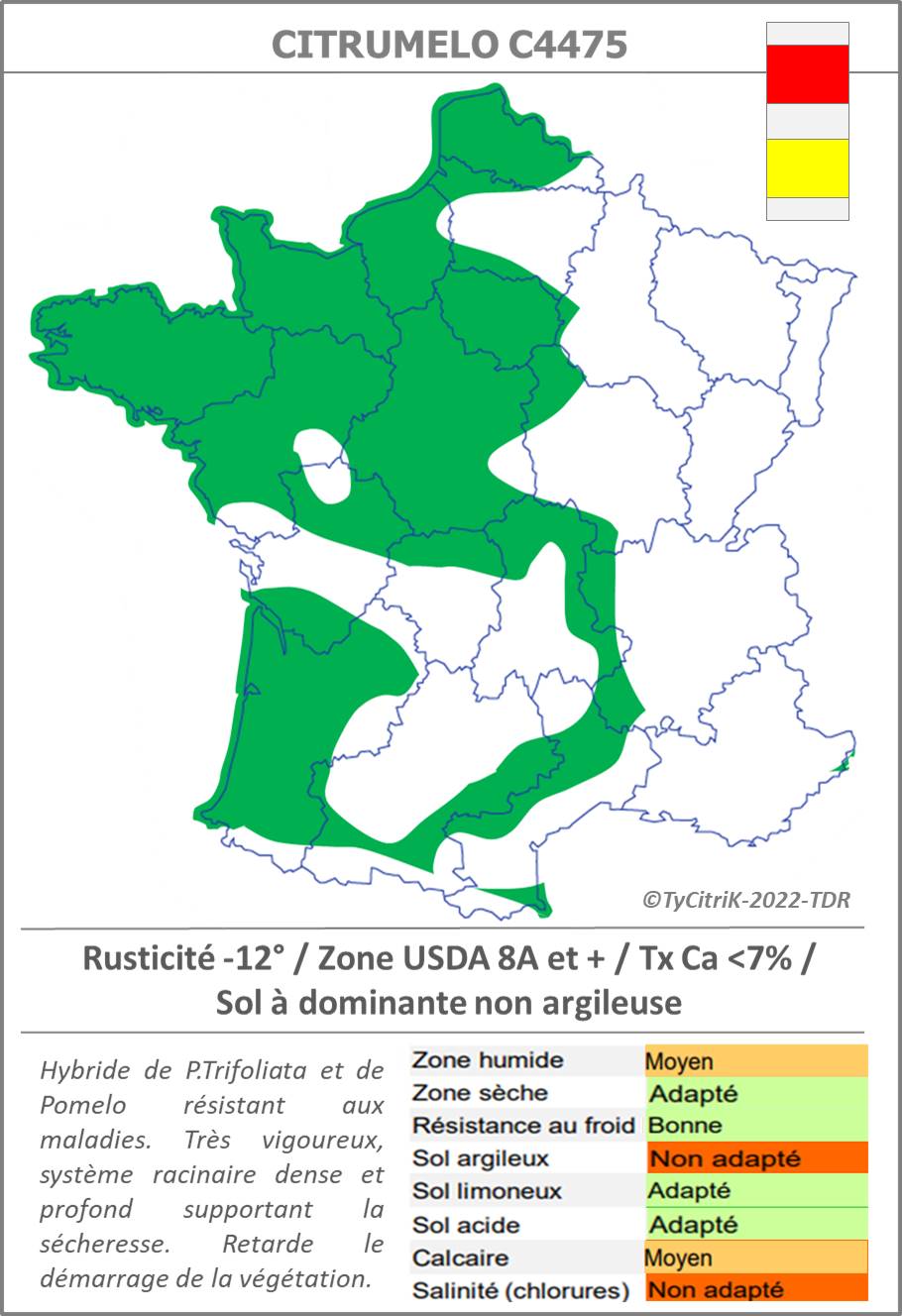
The 4475 is reasonably suitable, provided you dig planting holes of over a cubic metre, improve the soil with compost and sand to open up its structure, and use green manure over several years.
Poncirus is reasonably suitable too, again with holes of over a cubic metre, compost and sand, and above all generous watering in summer — awkward for me, since my 10 m³ of roof-fed rainwater storage is not enough for the greenhouse and the vegetable garden.
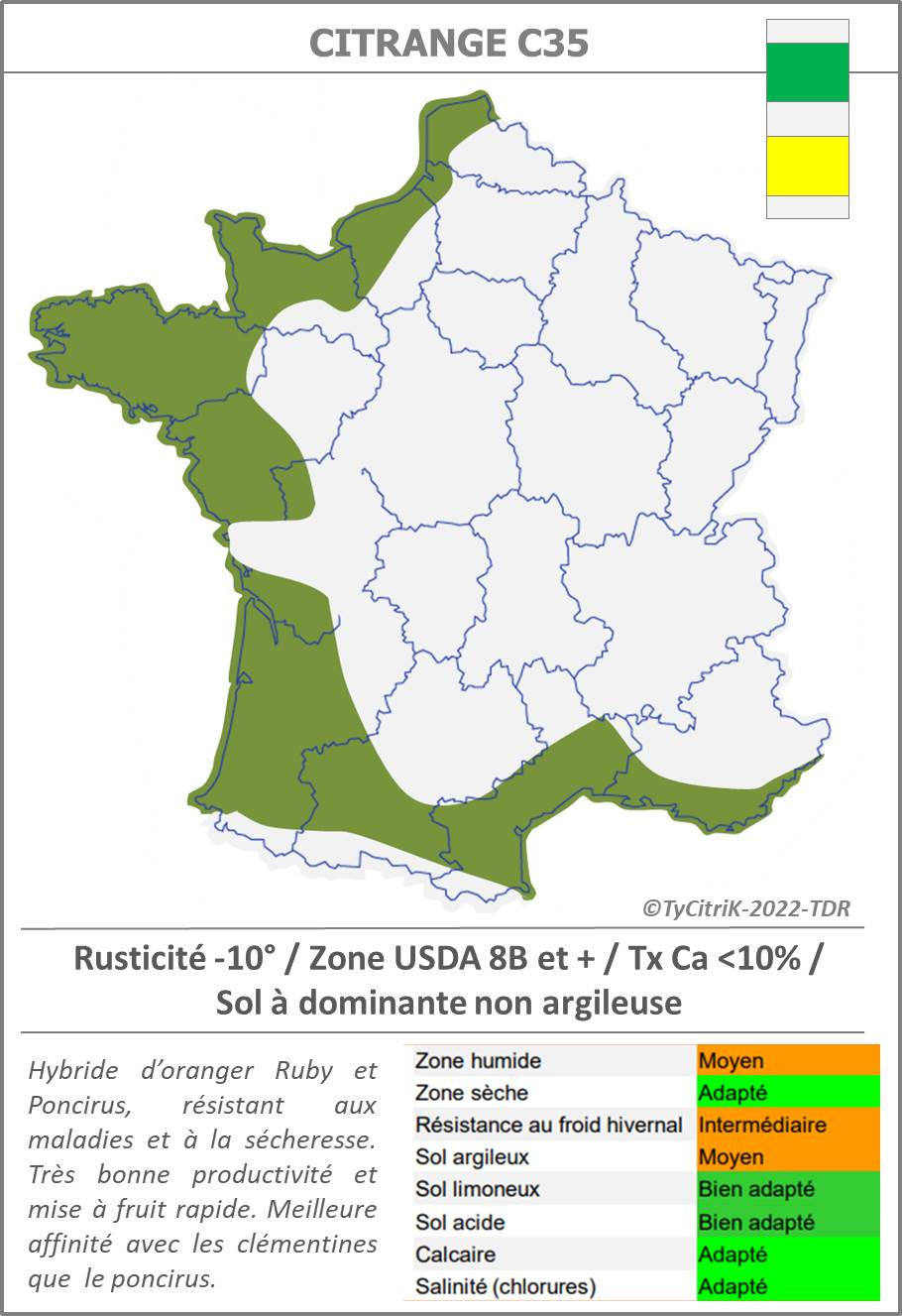
C35 looks suitable and is on trial here; it has come through several winters but has not grown much either.
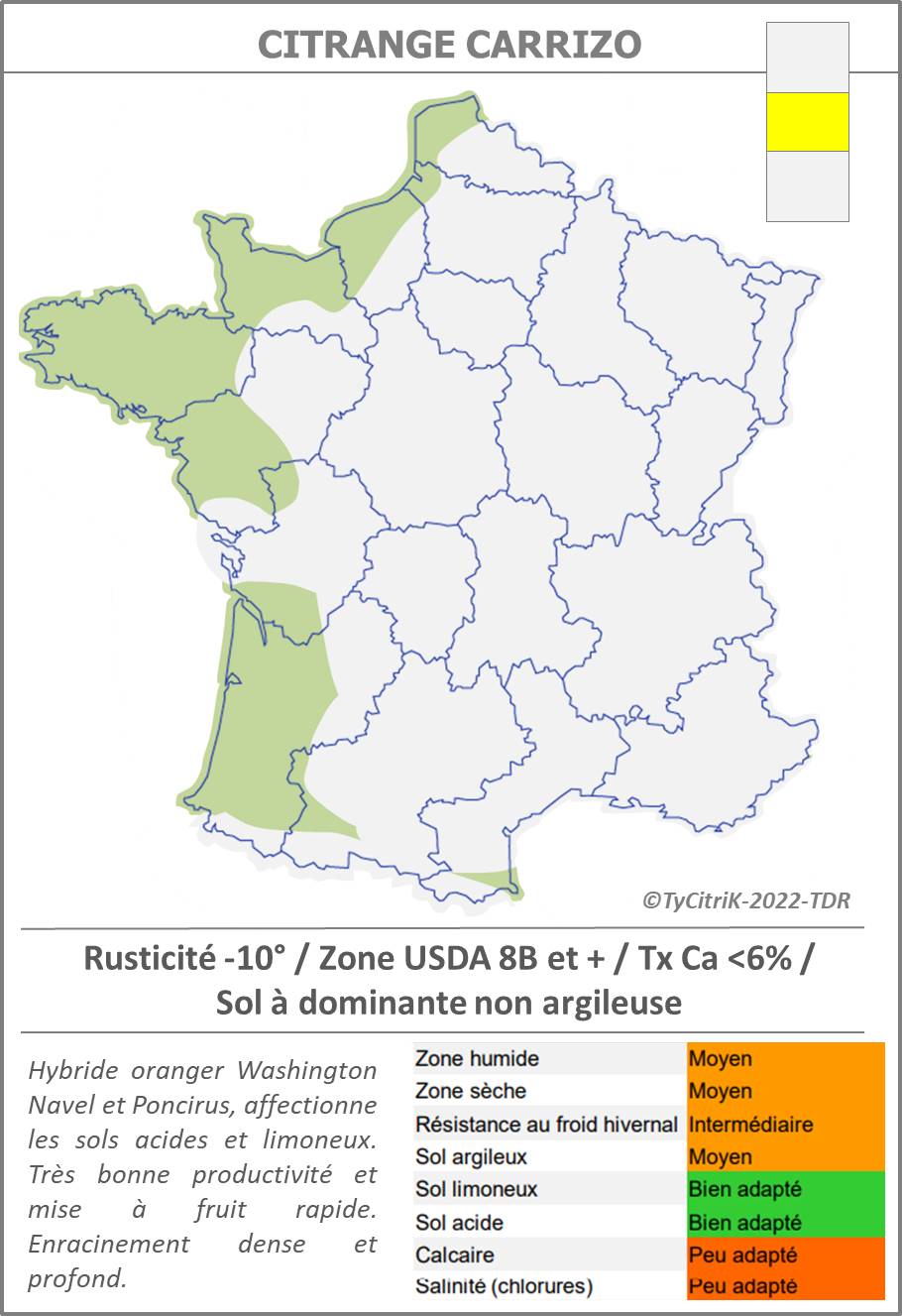
Carrizo is rated middling in wet ground, and in my trial they all died, under glass and outside alike, from excess water.
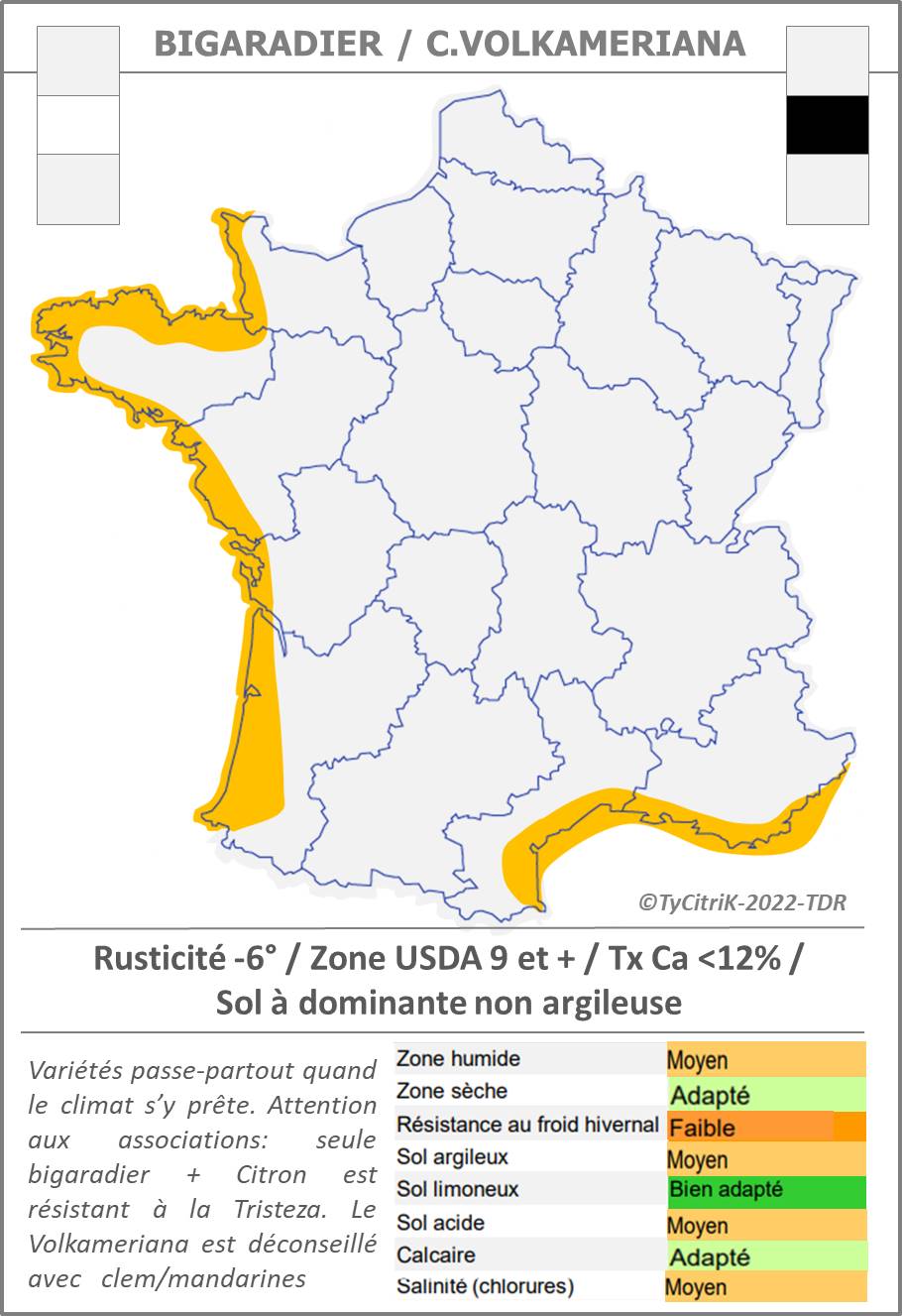
To finish with rootstocks, you can consult the summary maps below:
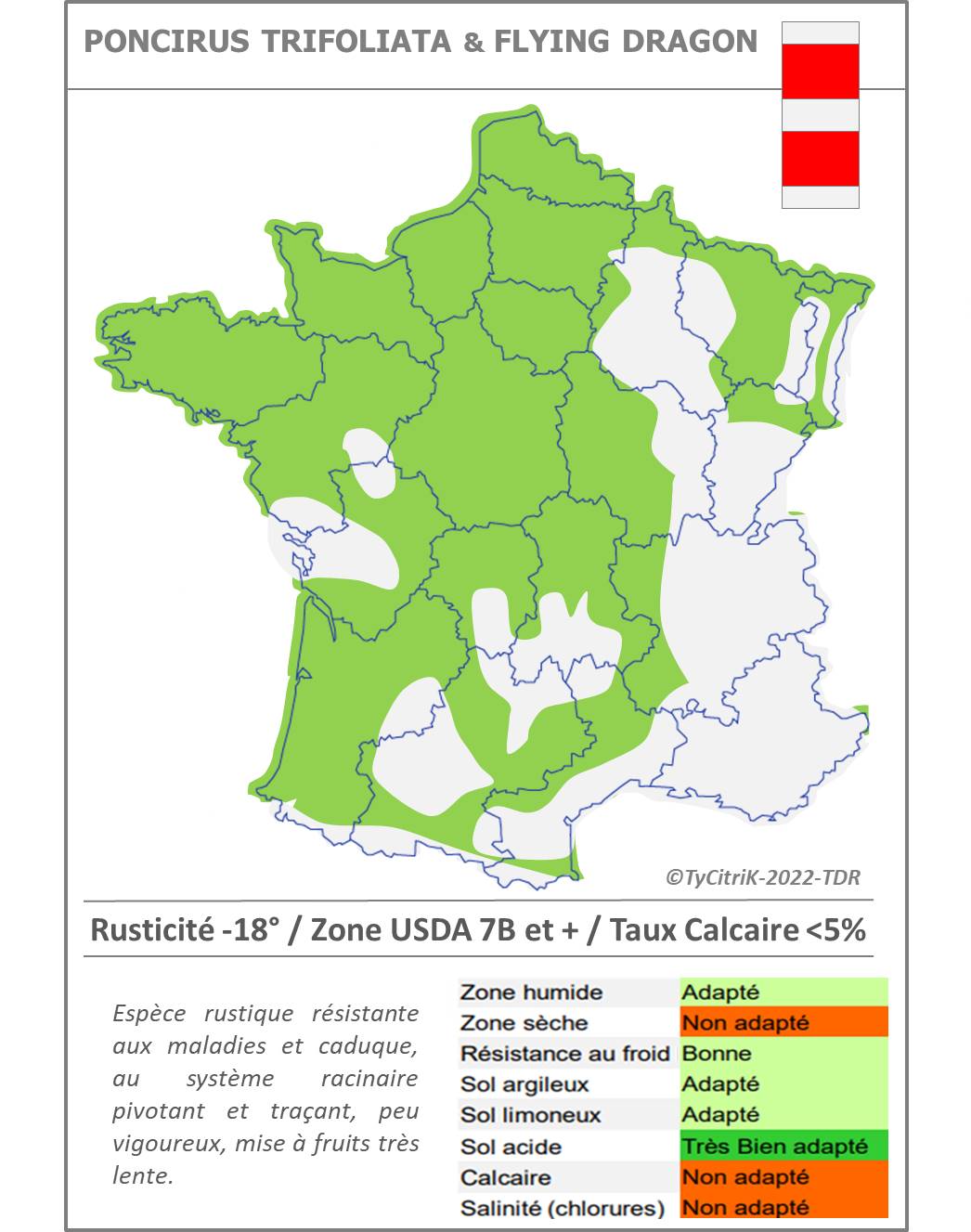
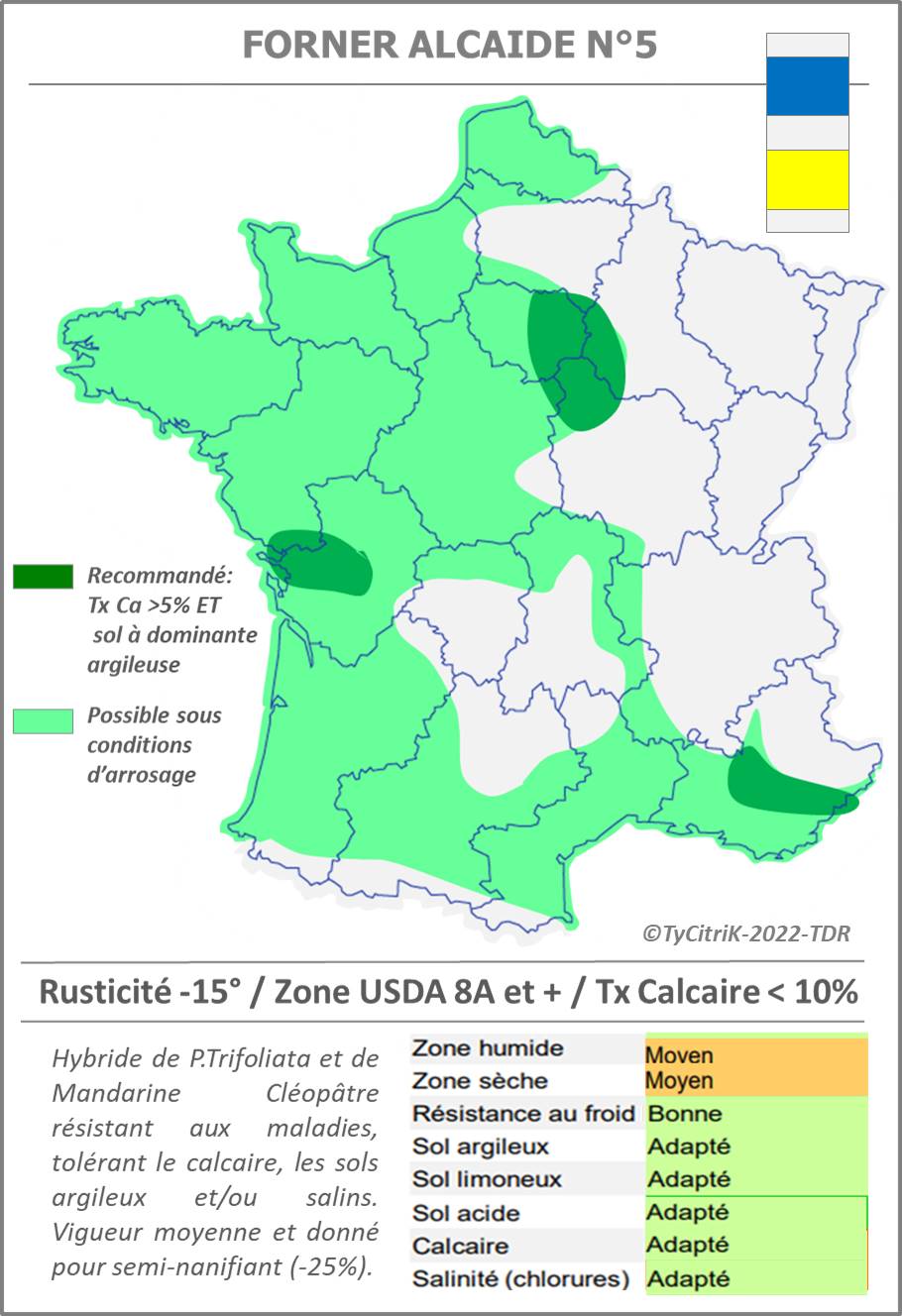
Once you have a shortlist, the last step is to check that what you want to graft is compatible with it.
The type to be grafted
Rootstocks have a greater or lesser affinity with the scion. The table below sets out what I favour here:

You should also make sure the rootstock is hardier than the scion:
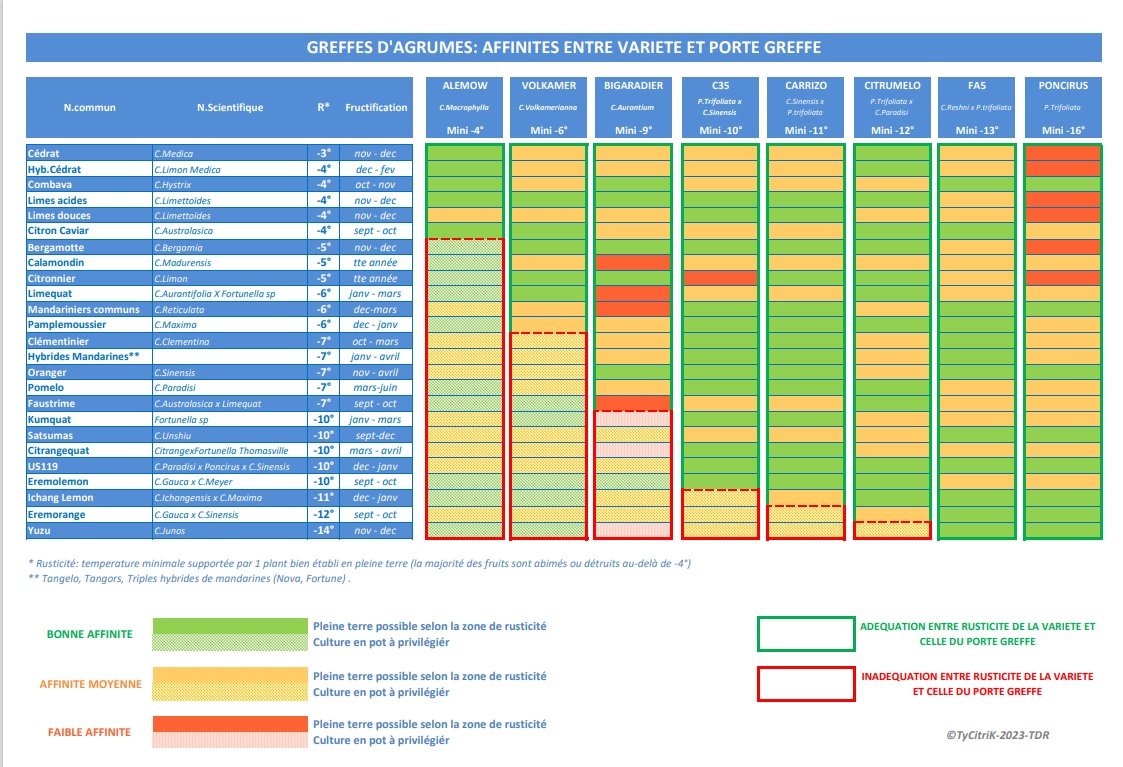
With all this you are in a position to choose the rootstock best suited to your conditions — because there is no perfect rootstock. We have not even touched on disease resistance, or the effect on the tree and the fruit…
Thanks to Tycitrik for sharing his maps and tables.