Meiwa produces rounded kumquats whose sweet rind is eaten with the flesh.
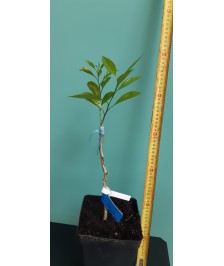
Hardy citrus
Mukaku Kishu, offered here as Kino Kuni Mikakukishu, is valued for its very small, seedless mandarins.
Wase denotes early satsumas; this plant is listed in the catalogue as “Waze”.
Minneola is a tangelo recognised by its prominent neck and deep orange rind.
Shunkokan offers yellow fruit with a fairly thick rind and juicy flesh.
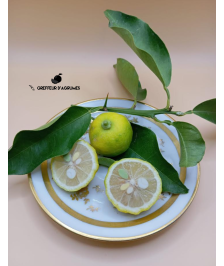
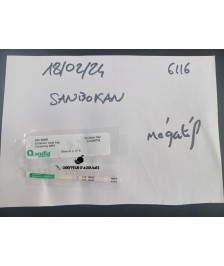
Sanbokan is recognisable by its prominent neck and relatively thick yellow rind.
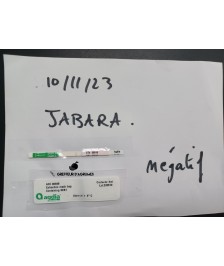
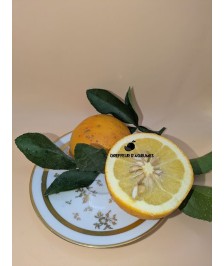
Jabara is a citrus from Kitayama in Japan, valued for a distinctive aroma and pronounced acidity.
Citrumelo combines grapefruit and trifoliate orange in a hybrid group widely used for rootstocks.
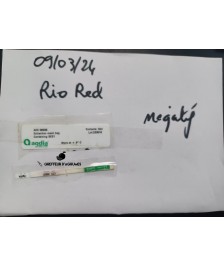
Rio Red offers pink-to-red flesh and abundant juice.
Ambersweet is a complex hybrid selected for orange-like uses, both fresh and juiced.
Montagnes Corse is a selection in our sweet-orange range.
Juanita is a mandarin offered to broaden the range of eating fruit in the garden.
Iwasaki is an early-season Japanese satsuma to grow alongside later varieties.
Kowano adds another selection to our range of easy-peeling satsumas.
Pucheng is a satsuma selection offered to diversify the garden’s mandarin trees.
Miho belongs to the early satsumas and offers mandarins that are easy to share in segments.
Dobashi Beni stands out for its deep orange-red rind.
Hana Yuzu, also called hanayu, is a small Japanese citrus used for its fragrant zest and acidic juice.
Harumi combines Kiyomi and Ponkan in sweet, juicy, easy-peeling fruit.
US 119 has complex parentage combining grapefruit, trifoliate orange and sweet orange.